Abbreviations

Abbreviations

GMB

Adult glioblastoma

pHGG

Paediatric high-grade glioma

UNCAN

EU initiative for understanding cancer

MRI

Magnetic resonance imaging 

SOC

Standard of care

I/O

Immuno-oncology

TTF

Tumour treating fields

World Cancer Day 2026

On World Cancer Day 2026, GLIOMATCH highlights the importance of placing patient perspectives at the heart of cancer research, particularly for glioblastoma, one of the most aggressive and difficult-to-treat brain tumours.

Patient voices shaping innovation in glioblastoma research

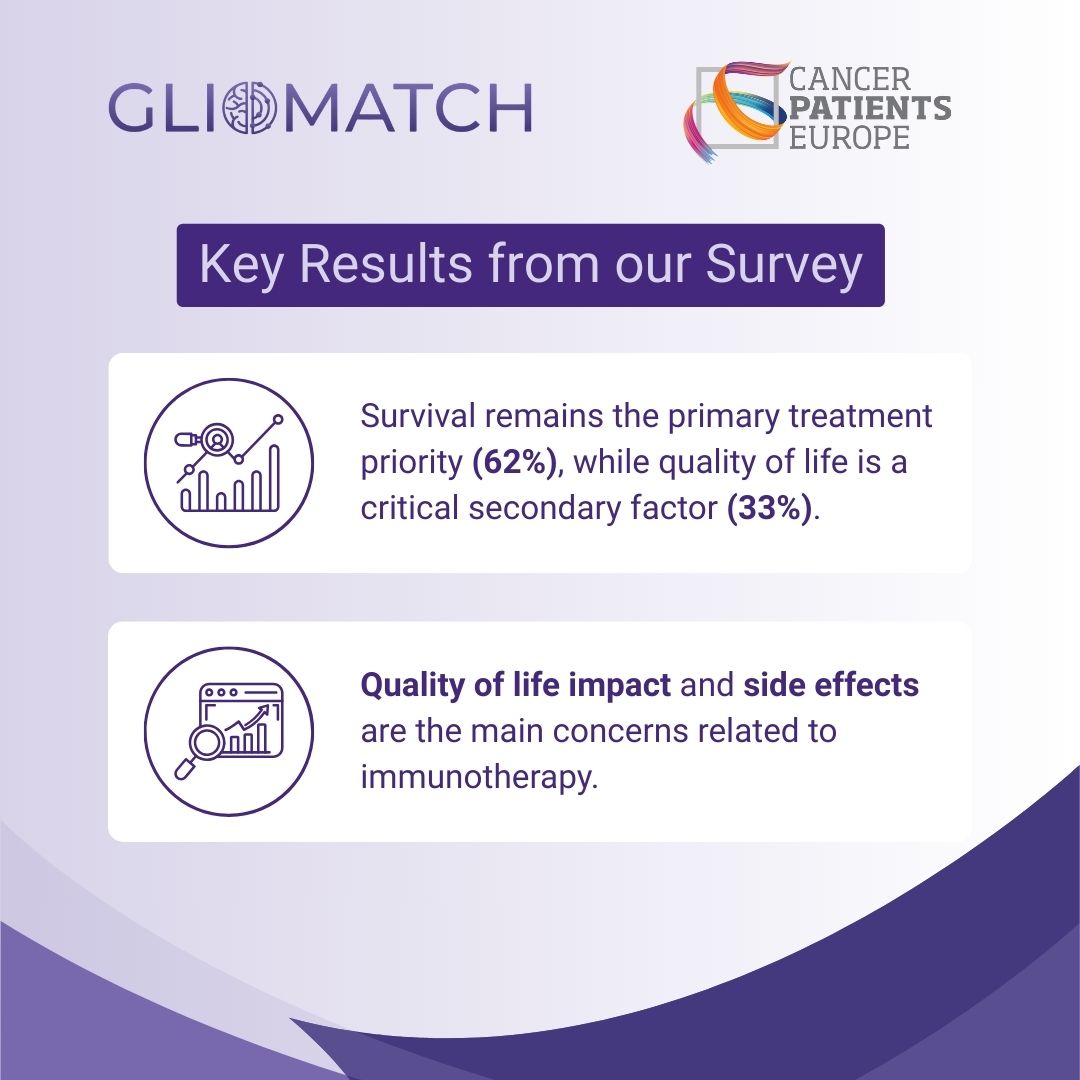
GLIOMATCH project partner Cancer Patients Europe (CPE) conducted a Europe-wide survey among people living with glioblastoma, as well as relatives and carers, to explore expectations, concerns and information needs related to innovative therapies, with a specific focus on immunotherapy. The CPE team has summarised the key results below.

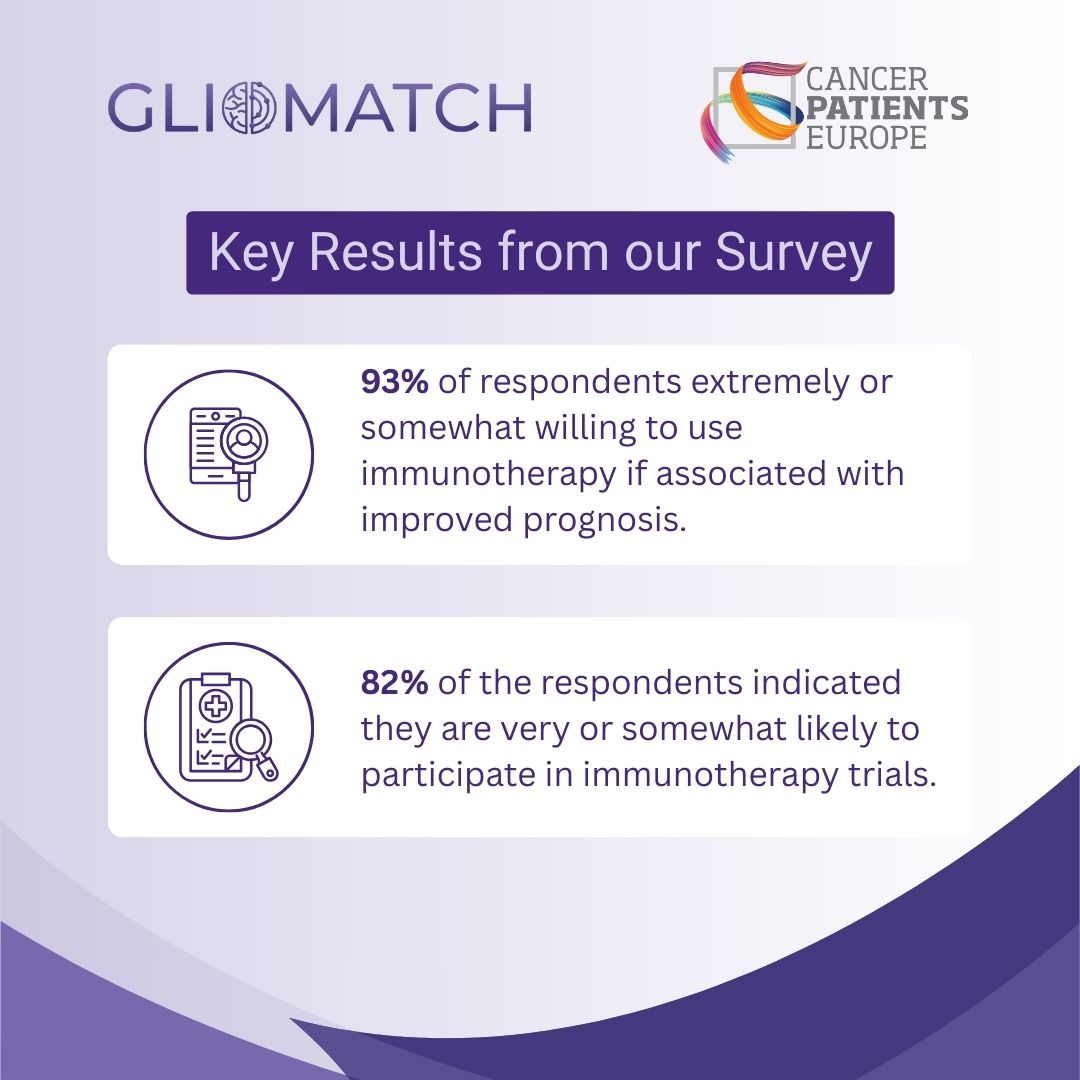
The survey results show that survival remains the primary treatment priority for 62 percent of respondents, while quality of life is a critical consideration for one in three. Although 93 percent of respondents said they would be extremely or somewhat willing to use immunotherapy if it offered an improved prognosis, their main concerns relate to potential side effects and the impact on daily life rather than cost.

Interest in clinical research is high, with 82 percent of respondents indicating they would be very or somewhat likely to participate in an immunotherapy clinical trial. However, many also reported limited understanding of the risks and benefits involved, underlining the need for clearer communication and better access to information.
Follow GLIOMATCH on LinkedIn and Facebook for more information on brain tumour research and updates on our milestones towards improving the clinical outcomes of GBM and pHGG.

More Posts

GLIOMATCH results contribute to new EIC-funded project GLIOBREAK

On International Childhood Cancer Day, GLIOMATCH highlights the urgent need for research into paediatric high-grade gliomas (pHGGs), rare and aggressive brain tumours affecting children. With a median survival of just over one year and no curative treatment available, collaborative research efforts are essential to better understand the disease, develop dedicated models, and tailor therapies that improve outcomes and quality of life for young patients and their families.

International Childhood Cancer Day 2026

On International Childhood Cancer Day, GLIOMATCH highlights the urgent need for research into paediatric high-grade gliomas (pHGGs), rare and aggressive brain tumours affecting children. With a median survival of just over one year and no curative treatment available, collaborative research efforts are essential to better understand the disease, develop dedicated models, and tailor therapies that improve outcomes and quality of life for young patients and their families.

International Day of Women and Girls in Science 2026

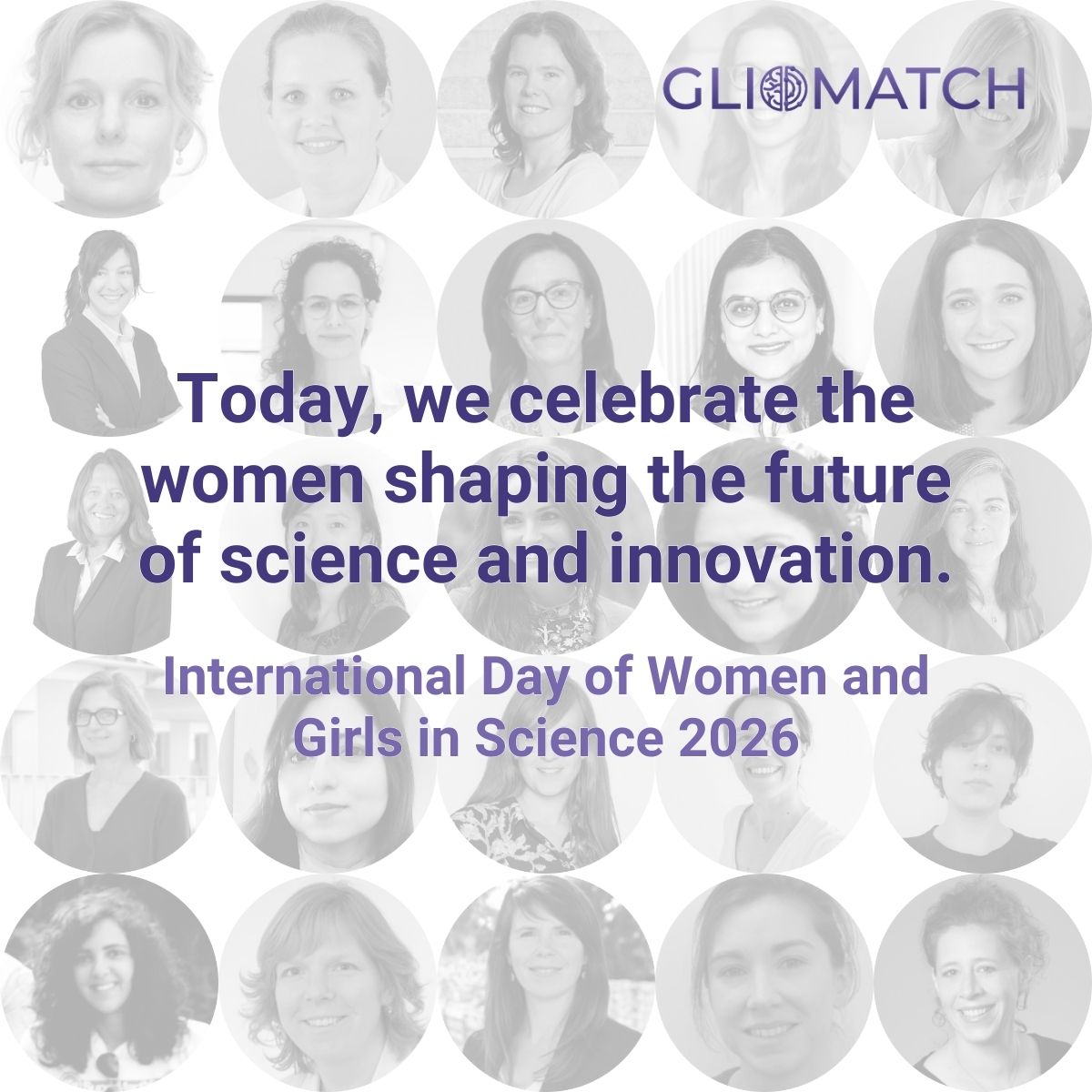
GLIOMATCH celebrates the women researchers across its consortium whose expertise and commitment drive the development of tailored immunotherapies for malignant brain tumours, marking the International Day of Women and Girls in Science 2026.

GLIOMATCH 3rd consortium meeting takes place in Düsseldorf, Germany

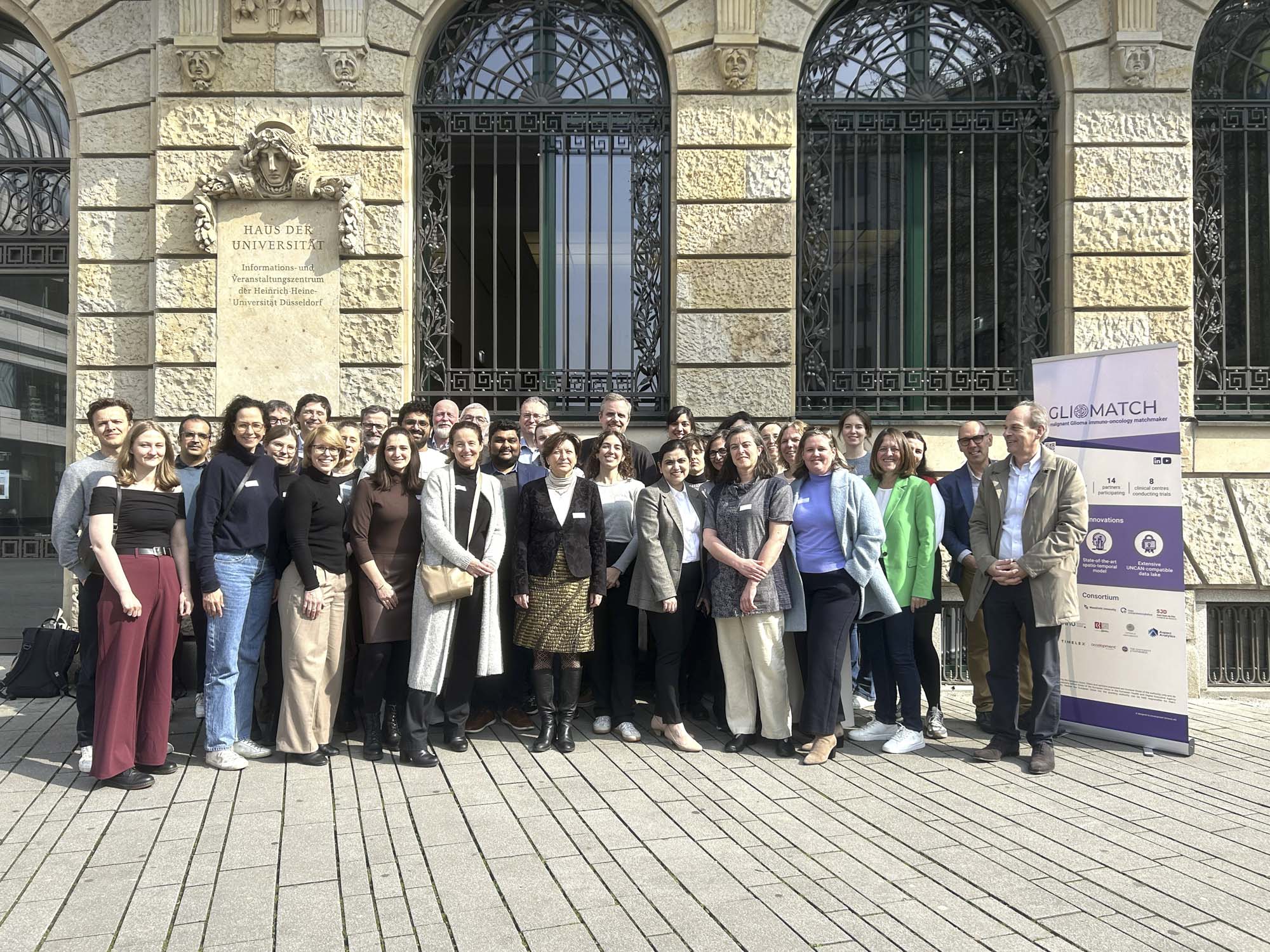
From 25 to 27 March 2025, the GLIOMATCH consortium convened in Düsseldorf, Germany, for its third consortium meeting. The meeting was held in-person and hosted by the partner University of Düsseldorf (UDUS). Over 40 experts from across Europe gathered to assess progress of the past year and plan the next phase of the GLIOMATCH project.