Abbreviations

Abbreviations

GMB

Adult glioblastoma

pHGG

Paediatric high-grade glioma

UNCAN

EU initiative for understanding cancer

MRI

Magnetic resonance imaging 

SOC

Standard of care

I/O

Immuno-oncology

TTF

Tumour treating fields
For patients

Find out more about how patient perspectives shape our research.

Why patient input matters

Patient and stakeholder involvement is a key factor of success in GLIOMATCH, with dedicated activities to gather feedback and integrate it into research and communication activities. The project aims to engage patients, carers, clinicians and researchers to ensure that scientific developments reflect real needs.

Our project partner Cancer Patients Europe (CPE) uses their network and experience representing patients to ensure that our research reflects what really matters to patients and families.

Patient survey and results

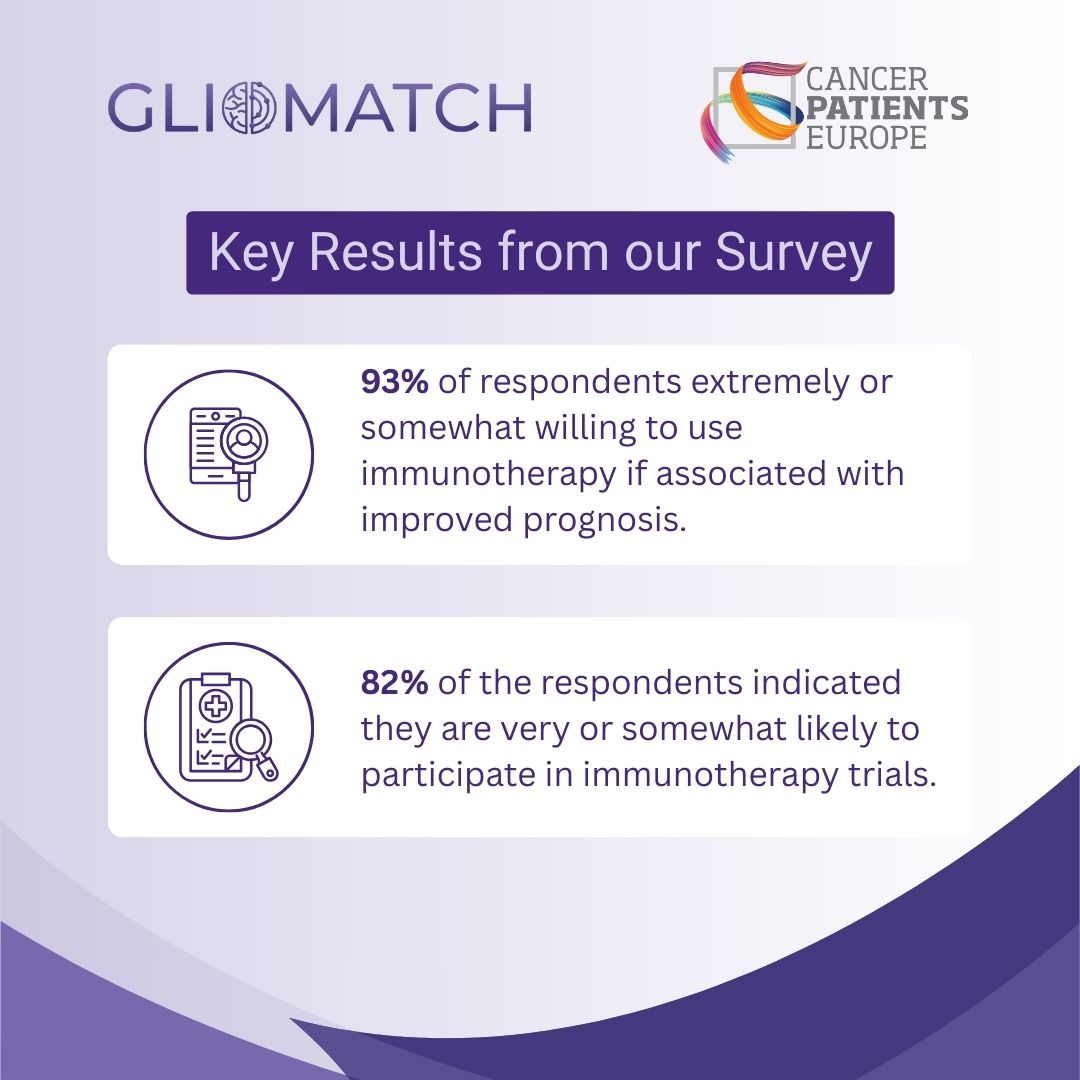
To better understand patient needs, Cancer Patients Europe (CPE) and KU Leuven conducted a survey among people affected by glioblastoma, including patients, relatives and carers across Europe. The survey was distributed via the networks of the participating clinical centres, through CPE’s network and through the GLIOMATCH channels.

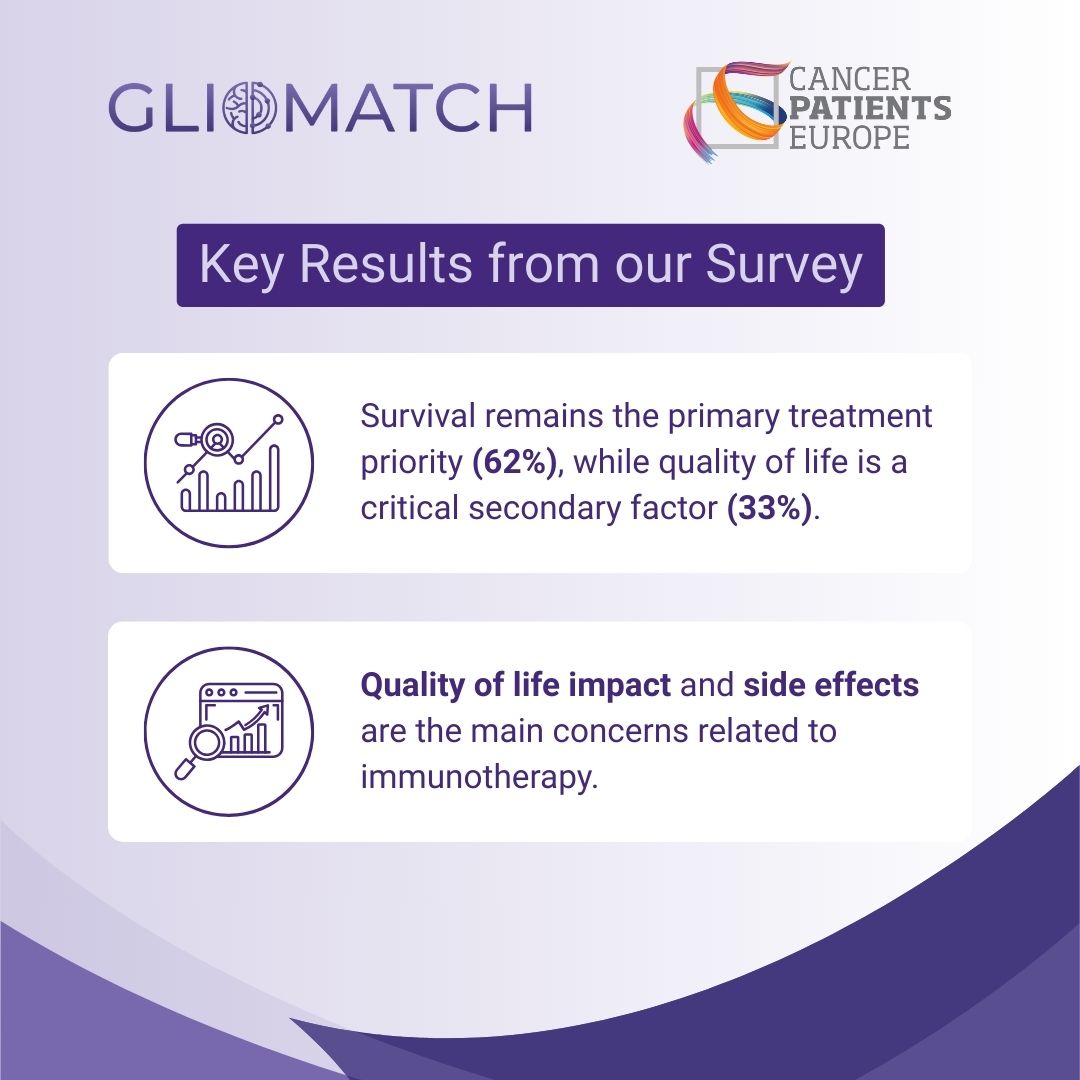
The results show that:

  • Most respondents are open to innovative therapies and willing to participate in clinical trials if there is a potential benefit
  • Survival is the main priority, but quality of life is also a key concern
  • Patients are particularly concerned about side effects, daily life impact and long-term effects of treatments
  • Many respondents would like clearer, more accessible information about clinical trials and treatment options

These findings highlight both a strong willingness to engage with innovation and a clear need for transparent, patient-friendly communication.

How this shapes our research​

The insights from patients directly inform the work of the project. GLIOMATCH focuses on developing personalised immunotherapy approaches that aim to improve clinical outcomes while taking quality of life into account. The project also places strong emphasis on making information accessible and understandable, and on ensuring that patient perspectives are reflected in research activities. Through collaboration with patient organisations such as CPE, feedback from patients is continuously integrated to help ensure that the project delivers meaningful benefits.

FAQs

What is the goal of the GLIOMATCH project?

GLIOMATCH aims to improve outcomes for patients with glioblastoma and paediatric high-grade glioma by developing personalised immunotherapy approaches. The project combines clinical data, imaging and advanced molecular analysis to better match patients with the most effective treatments.

Patient involvement is a key part of GLIOMATCH. Through surveys, feedback activities and collaboration with patient organisations such as Cancer Patients Europe (CPE), the project ensures that patient perspectives are considered in research and communication activities.

The GLIOMATCH patient survey was conducted by Cancer Patients Europe (CPE) in collaboration with KU Leuven to better understand the needs, expectations and concerns of people affected by glioblastoma, including patients, relatives and carers. The survey focused in particular on views around innovative therapies such as immunotherapy and clinical trials. Its results help guide the GLIOMATCH project to ensure that research and communication activities are aligned with patient priorities.

The GLIOMATCH project recruits participants directly through clinical centres involved in the research. You can find more information about the project and participating centres on our Clinical trials page.

Please note that immunotherapy with dendritic cells is still an experimental approach, and its effectiveness has not been conclusively clarified. We cannot say anything about the quality and seriousness of private providers of vaccination therapy.

For more information on clinical trials, we recommend consulting with your oncologist. Additionally, you can search for relevant clinical studies through the following databases:

These platforms list registered studies, which may help you find a suitable trial.