GLIOMATCH participated in 5 years EU Cancer Mission: Stronger Through Connection, taking place in Brussels from 29 September to 1 October 2026. Organised by the European Commission, the event brings together researchers, clinicians, patients, policymakers and industry representatives to reflect on five years of the EU Cancer Mission and the next steps towards its 2030 goal.
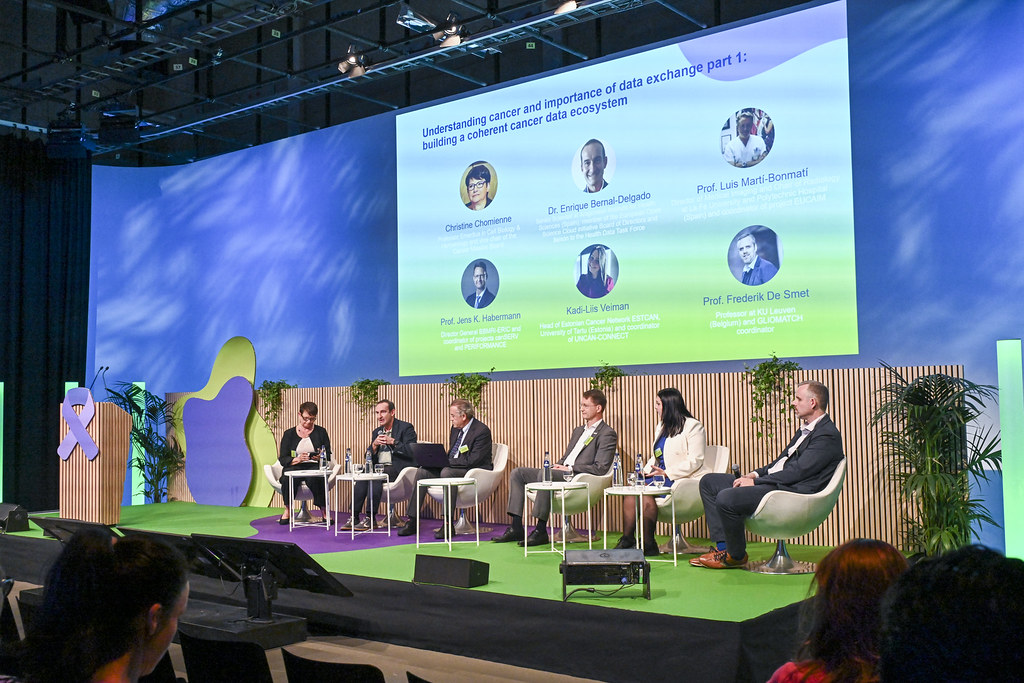
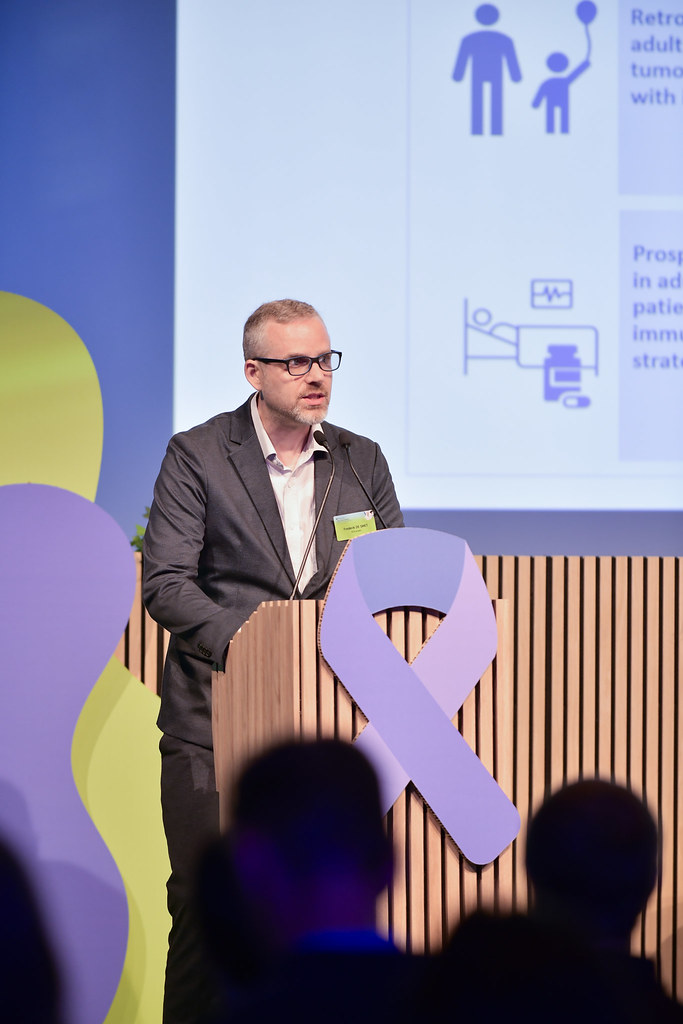
GLIOMATCH coordinator, Prof. Frederik De Smet (KUL-LISCO), spoke about connecting brain tumour data for precision oncology and joined a panel discussion at the event. Below, we share the video of the full panel discussion along with a summary of his talk in his own words.
Watch the presentation and panel discussion recording
Read the presentation transcript
The overall aim of GLIOMATCH is indeed to understand why some patients with brain tumours respond to immunotherapy and others do not and to use that knowledge to improve precision oncology. This is particularly important in brain cancer. These are highly aggressive diseases with very limited treatment options and for glioblastoma survival remains very poor. We therefore need to learn as much as possible from patients who have already been treated, what was present in their tumour, which treatment did they receive, whether they responded or not, and how the disease evolved afterwards.
To do this, GLIOMATCH brings together eight clinical centres across Europe. Across these centres, we collect the data and tumour samples from both adult and paediatric patients. We work with retrospective cohorts of patients who have already received immunotherapy, but also with prospective clinical trials testing new immunotherapy strategies. The strength of the project is that the biological material is linked to the clinical history of each patient. So the patient and the clinical trajectory are the starting point of the project.
Now from these patients we bring together three major types of information. First we profile the tumour tissue in great detail using advanced single-cell and spatial technologies. We are characterising millions of individual cells and study how these tumour cells interact with cells in their so-called microenvironment, their close vicinity, typically immune cells. Second, we collect the clinical data, the treatment that patients received, survival and progression, and importantly, whether there was a response or not to the provided therapy. Third, we integrate MRI imaging and longitudinal follow-up. This allows us to connect what we see at the cellular level with what happens to the tumour in the patient over time. So, we are therefore trying to connect tissue, imaging and clinical response for the same patient. All of these data then need to become accessible to researchers across the consortium. For that reason, GLIOMATCH has built a cloud-based environment in which the different data modalities are brought together and analysed. This sounds straightforward, but the data sets are large, complex, and generated at different centres using different technologies. Making them securely accessible while keeping the different data types connected to the correct patients is already a major data management challenge.
But collecting the data is only the first step. The real scientific challenge is to bring all these layers together. Our ambition is to evolve towards a data-driven matchmaker system. A system that learns from the cellular composition of the tumour, the imaging, the treatment history and the observed clinical response. Ultimately, we want this integrated information to support patient stratification, help identify which therapeutic strategy may be relevant for which patient and enable longitudinal follow-up as the tumour changes over time. So the value does not come just from the single data sets. It comes from making the different data sets work together.
And this is where the broader challenge of data exchange becomes critical. Within GLIOMATCH, we already have to solve questions around governance, harmonisation, interoperability, storage and access across multiple countries and institutions. But we also need to think beyond the lifetime of one project. The data we generate should not disappear when the project ends. We want it to be reusable, interoperable, and connectable to larger European initiatives such as the UNCAN and CANDLE initiatives. And if we can build that kind of sustainable cancer data ecosystem, every new data set can add to what we have already learned. And that is ultimately what we need for precision oncology: to turn data from previous patients into knowledge that can help us make better decision for future patients. So the goal is not simply to generate more data but to connect and reuse data so that it can improve precision oncology over time.”